

To be honest, my team and I feel a bit embarrassed. Surprisingly, blogging is kind of our core focus here at The HubSpot BLOG, so the fact that it has taken us more than ten years to publish our very first report on the state of blogging isn’t exactly flattering.
But as the old Chinese proverb goes, “The best time to plant a tree was 20 years ago. The second best time is now.” That’s why we surveyed over 500 marketers from diverse industries and company sizes to understand the current landscape and future direction of blogging.

We explored all the key questions, such as:
- Do companies continue to publish blog content?
- Why do companies engage in blogging?
- What types of content are companies producing?
- Where does blog traffic originate?
- How is AI reshaping blogging?
- How are blogs adapting to the era of E-E-A-T?
- What does the future hold for blogging?
- And much more!
Take a look!
Do companies still publish blog content?
The short answer? Absolutely, and with good reason.
Our survey reveals that 65% of marketers work for companies that maintain blogs, and they tend to post regularly. Here’s what we found:
- 22% of these companies publish daily.
- 37% publish two to three times a week.
- 30% publish weekly.
- 7% publish every two weeks.
- 5% publish monthly.
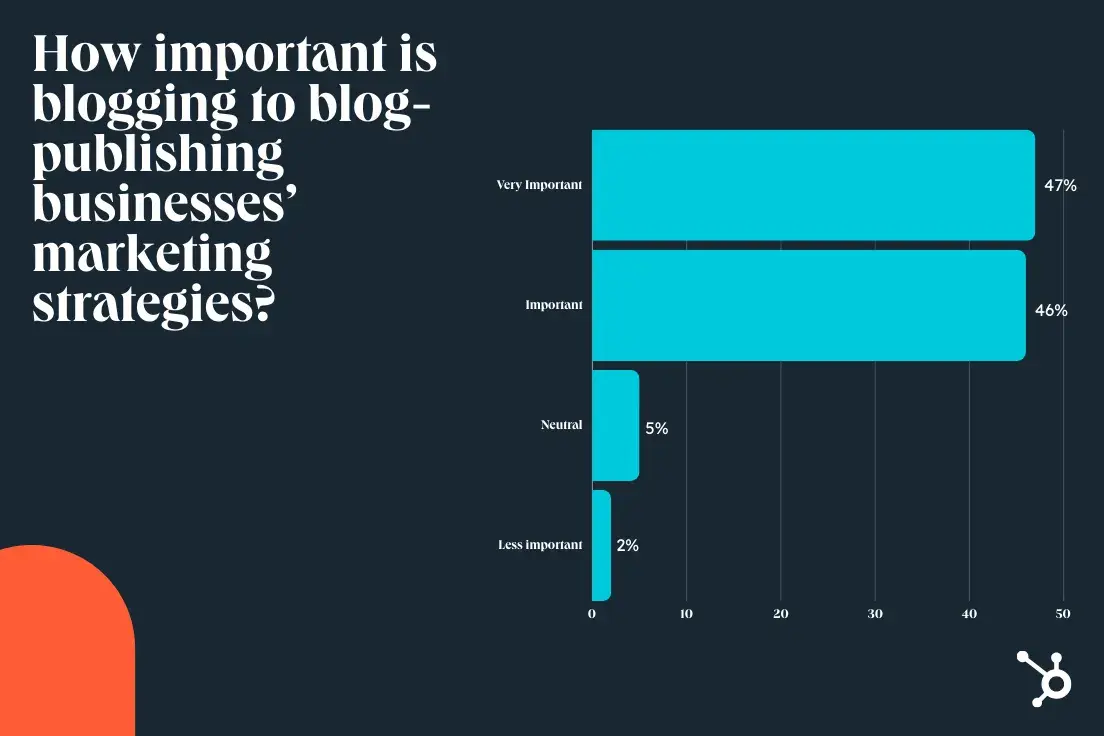
The majority of respondents consider blogging vital to their overall marketing efforts. Among those whose companies blog:
- 47% say it’s very important.
- 46% say it’s important.
- 5% feel neutral about its importance.
- 2% think it’s less important.
That explains why blogging remains a key part of many marketing budgets. According to our survey:
- 24% allocate under 10% of their marketing budget to blogging.
- 31% allocate 11-20%.
- 25% allocate 21-30%.
- 18% allocate over 30%.
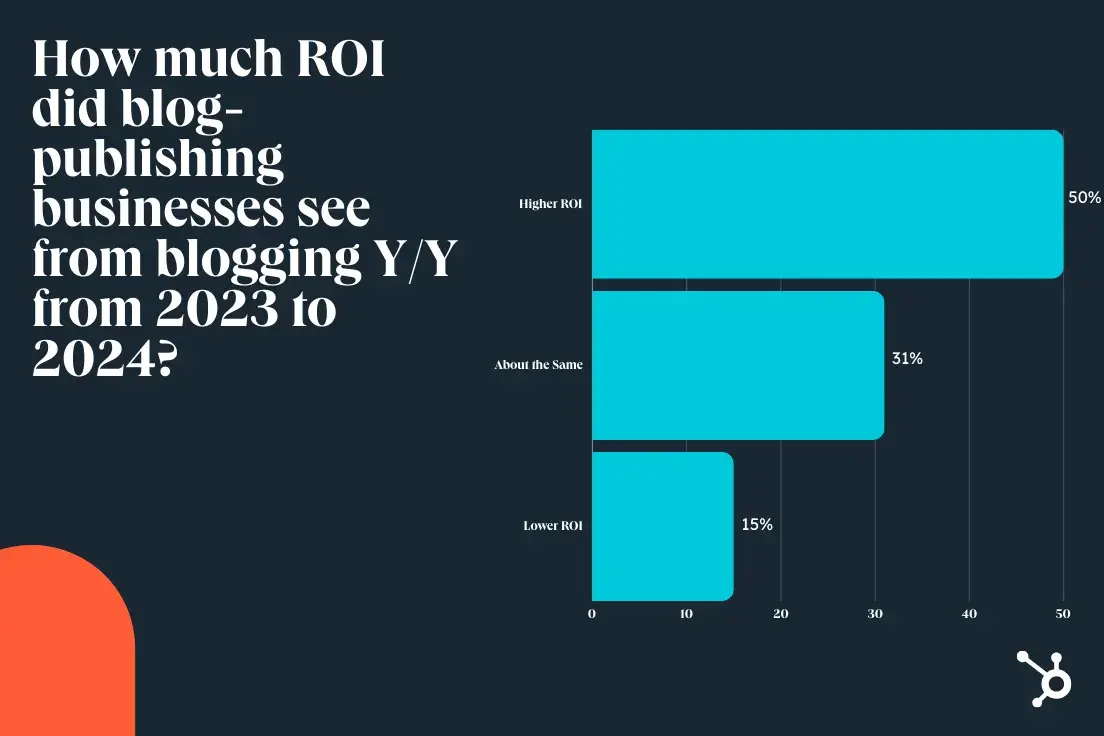
These numbers make sense given the returns blogging delivers. In our findings:
- 50% of marketers from blogging companies reported higher ROI from blogging in 2024 compared to 2023.
- 31% saw about the same ROI year over year.
- 15% experienced a lower ROI.
It’s no surprise that many blogging businesses plan to increase their investment. Our data shows:
- 45% plan to boost blogging budgets in 2025 compared to 2024.
- Only 13% intend to reduce spending.
- 40% will maintain their current level of investment.
All signs point to blogging remaining popular and here to stay — but why exactly is that?
Why do companies blog?
Blogging serves multiple marketing goals. Most businesses use it primarily to attract attention. Here’s what our research indicates:
- 66% blog for brand awareness.
- 53% for customer engagement.
- 49% for lead generation.
- 34% for SEO.
- 26% to establish thought leadership.
These objectives correlate with the metrics businesses track to measure blog success. Brand awareness-related KPIs are especially common. Our findings include:
- 54% use pageviews.
- 53% monitor social shares.
- 46% track conversion rate.
- 45% gauge time on page.
- 22% track backlinks.
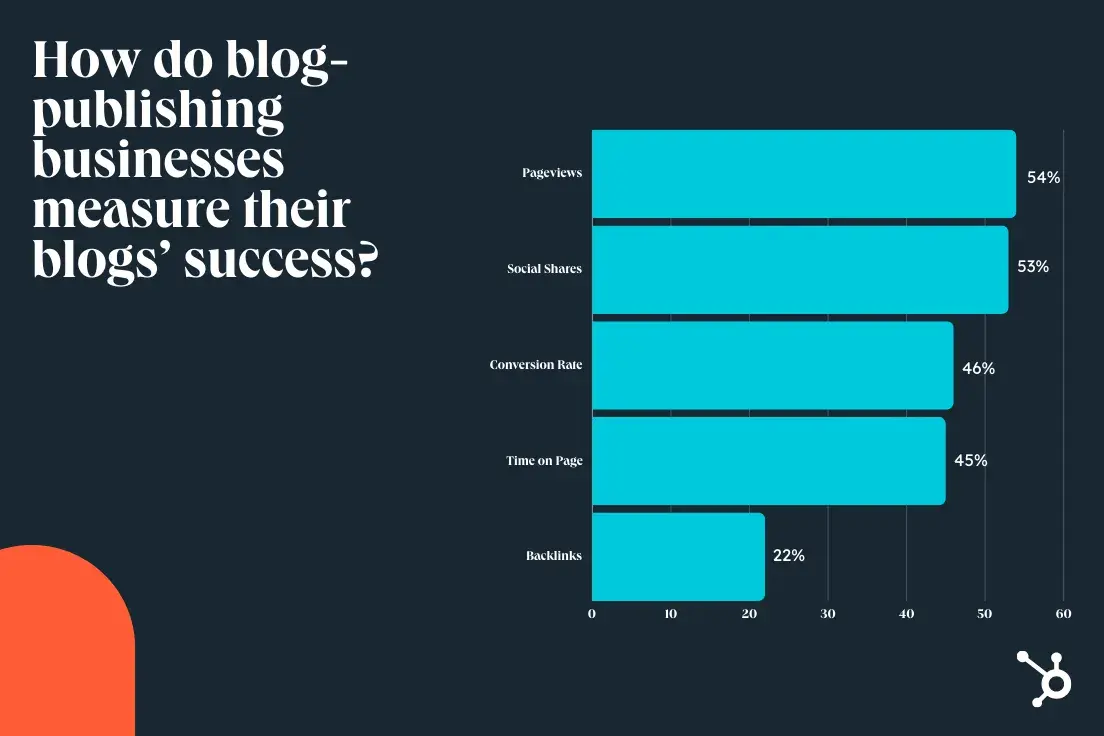
In essence, blog content is often a promotional tool. While some prioritize direct conversions, many see it as a way to showcase their brand to potential customers. And within that broad goal, there are plenty of content formats to explore.
What kind of content are companies publishing?
Company blogs often balance evergreen, long-lasting content with timely, trend-focused articles. Marketers in the survey generally produce both. Our research shows:
- 40% create an even 50/50 split of evergreen and timely content.
- 24% produce 75% evergreen and 25% timely.
- 18% produce 75% timely and 25% evergreen.
- 7% focus solely on evergreen content.
- 2% focus exclusively on timely content.
They also find success with a variety of content styles:
- 51% rank how-to guides as top performers.
- 45% highlight industry news.
- 42% use case studies.
- 34% publish in-depth encyclopedic articles related to their fields.
- 23% use product listicles.
However, the structure won’t matter much without effective content distribution — a challenge all content strategists recognize.
Where does blog traffic come from?
Obtaining engaged readers is both difficult and crucial. With shifts in organic search dynamics and the rise of short-form content, having multiple distribution channels is no longer optional—it’s essential.
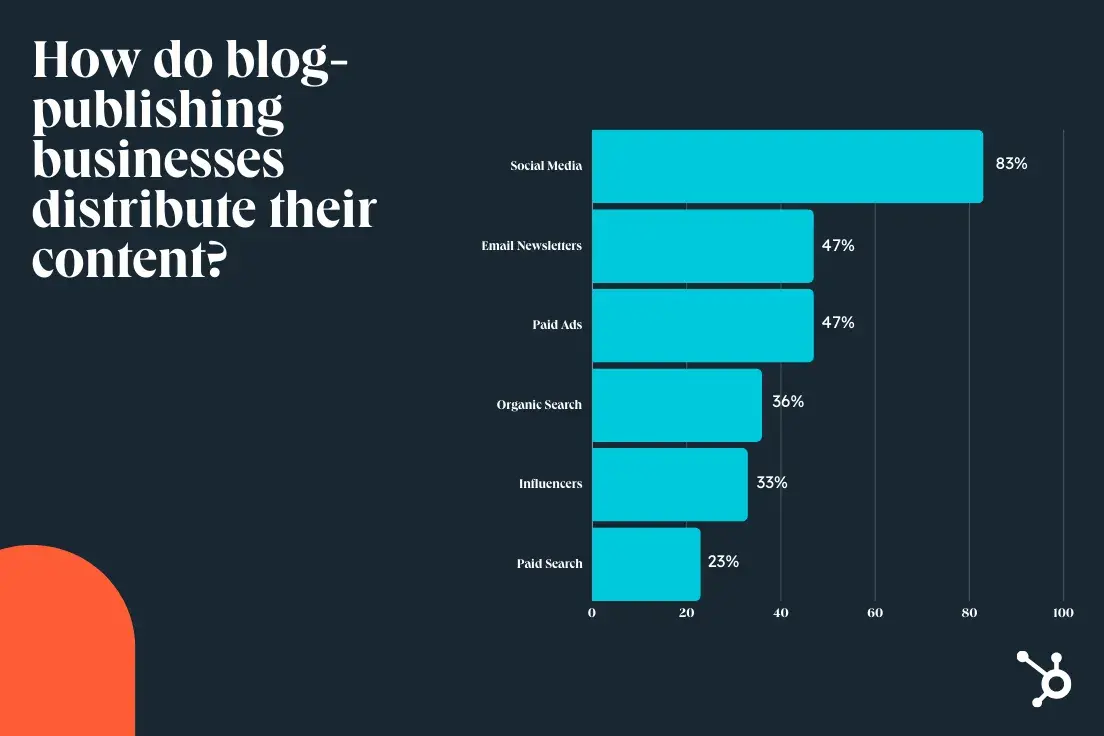
Respondents reflected this reality. Our study found:
- 83% use social media to share blog content.
- 47% use email newsletters.
- 47% rely on paid advertising.
- 36% gain traffic through organic search.
- 33% work with influencers.
- 23% use paid search ads.
When it comes to traffic sources, businesses with blogs are fairly split:
- 38% rely primarily on organic traffic.
- 21% depend mostly on paid channels.
- 36% use an even mix of both.
Speaking of essentials turning vital, let’s explore how AI factors into blogging.
How does AI play in?
Generative AI is arguably the most disruptive force content marketing has faced—perhaps even beyond that field.
It’s forcing bloggers to adapt or fall behind, and our data shows respondents acknowledge this. Findings include:
- Only 4% never use AI tools in content creation.
- 21% use AI for less than 25% of their content.
- 37% use it for 25-50%.
- 19% for 51-75%.
- 16% for over 75%.
AI assists bloggers at various content stages:
- 43% use AI for editing and proofreading.
- 38% for outlining.
- 37% for first-draft writing.
- 31% for image generation.
- 30% for topic research.
- 26% for meta description creation.
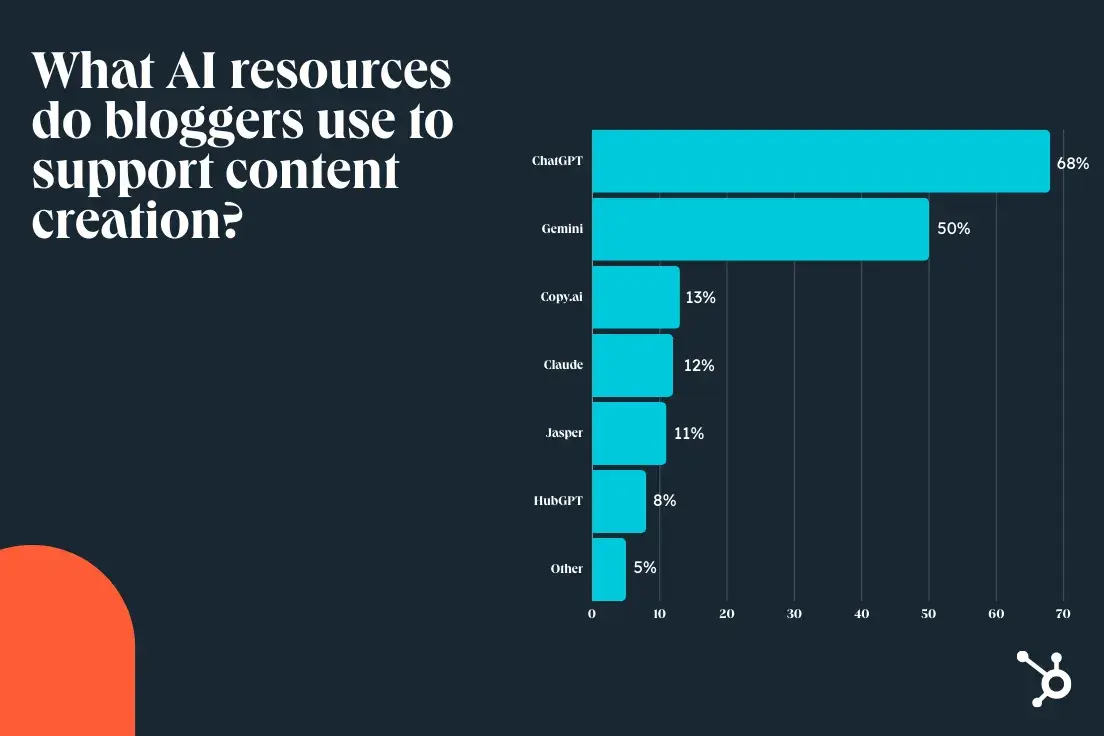
Popular AI tools among bloggers include:
- ChatGPT (68%)
- Google Gemini (50%)
- Copy.ai (13%)
- Claude (12%)
- Jasper (11%)
- HubGPT (8%)
- Others (5%)
One major benefit of incorporating AI has been boosting content output. Our research shows:
- 19% saw significant increases in production.
- 48% noticed moderate increases.
- 17% experienced no change.
- 9% saw moderate decreases.
- 3% observed significant decreases.
Besides AI, recent years have also seen Google emphasize E-E-A-T (Experience-Expertise-Authority-Trust), a crucial new ranking factor that values genuine experience with topics.
How are blogs E-E-A-T-ifying?
Many blogs have scrambled to align with E-E-A-T. Our respondents reported various tactics:
Building author credibility is key. Some approaches include:
- 43% cite published works and references.
- 42% add author bios showcasing credentials.
- 40% provide links to professional profiles.
- 27% highlight industry certifications.
- 8% were unsure.
Incorporating research and data helps too, with usage as follows:
- 8% feature data in 0-20% of posts.
- 23% in 21-40%.
- 28% in 41-60%.
- 26% in 61-80%.
- 13% in 81-100%.
- 3% uncertain.
However, data alone isn’t enough to succeed on SERPs. The “Experience” element of E-E-A-T highlights the value of first-hand insights. Our findings show:
- 45% highlight personal team experiences.
- 36% include direct quotes from subject-matter experts.
- 35% showcase client case studies.
- 33% conduct expert interviews.
- 25% share product testing results.
- 10% do not document experience explicitly.
- 6% were unsure.
Ultimately, E-E-A-T represents one of the most profound shifts in organic search, greatly influencing blog content development. The main adaptations include:
- 39% increased citation of primary sources.
- 34% implemented expert review processes.
- 36% added original research and data.
- 31% enhanced fact-checking procedures.
- 20% added author bios and credentials.
- 12% made no major changes.
- 7% were unsure.
With all these changes and uncertainties, the big question remains — where is blogging headed?
Where is blogging headed?
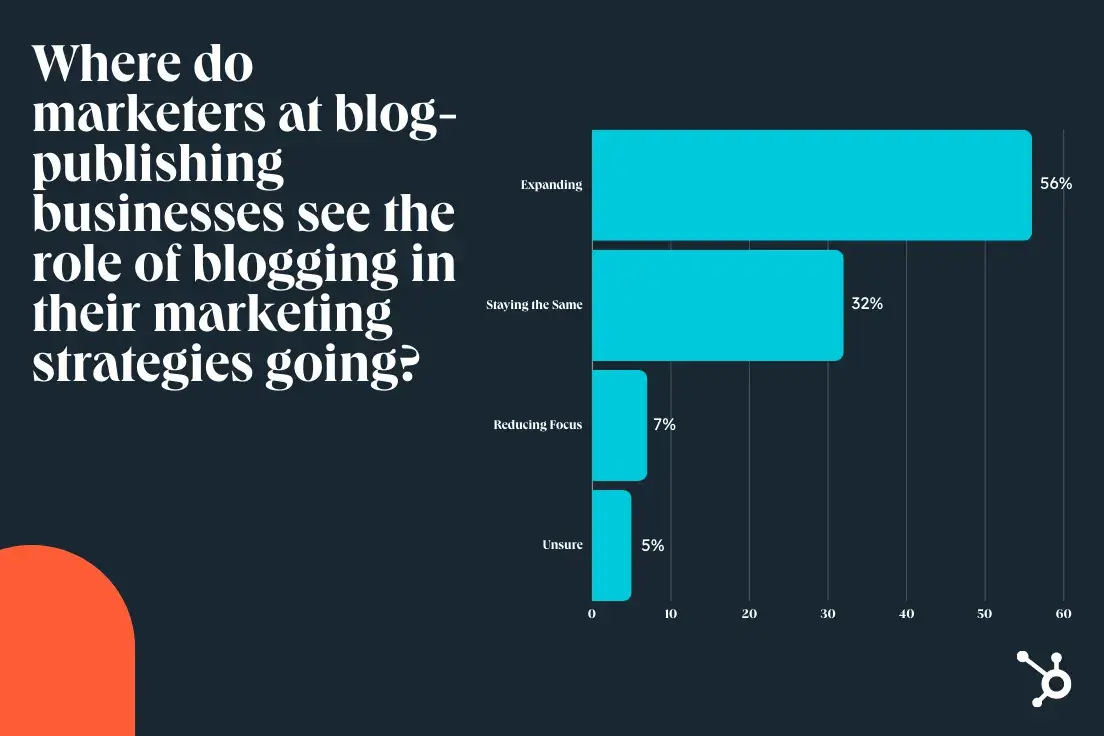
Despite recent challenges and unpredictability recognized by many content strategists, most surveyed marketers are optimistic about blogging’s future.
Here’s what they shared:
- 56% see blogging’s role expanding in their content strategy.
- 32% expect it to remain stable.
- 7% plan to reduce focus.
- 5% were unsure.
Nevertheless, content marketing constantly evolves, and relying exclusively on blogs won’t cut it. Accordingly, most respondents invest in other formats as well:
- 81% are investing in video.
- 53% in podcasts.
- 46% in newsletters.
- 39% in webinars.
- 20% in ebooks.
So what is the state of blogging in 2025?
All in all, if our research is any indication, blogging is far from obsolete halfway through the 2020s. The rise of AI and the introduction of E-E-A-T rank among the most transformative recent developments, but bloggers are adapting well.
Blogging remains one of the most effective tools marketing teams use to achieve vital goals like lead generation and brand awareness. The continued investment by marketers signals its versatility and effectiveness.
So, how would we summarize the state of blogging? One word — solid.
It is ever-evolving and quite different from its earlier forms, yet it continues to be a dependable, valuable part of marketing strategies.
“Behind the Blog”: A Look at the Ins and Outs of The HubSpot Blog Team
- HubSpot’s SERP Secrets: How The HubSpot Blog Is Combatting SERP Volatility
- How the HubSpot Blog Built a Freelance Writing Program That Actually Makes Great Content
